If you’re heading into the mountains of SalzburgerLand, make sure you’re properly equipped, physically fit, and always keep a close eye on the weather. Outdoors-loving travelers face a welcome dilemma: Which route to choose? Where to stop for food along the way? We’ve put together a few suggestions – from leisurely to demanding, from adventurous to family-friendly.
The most important thing is to behave responsibly when you are in the mountains – toward people as well as nature. That also means avoiding unnecessary risks and preparing carefully based on the difficulty of your chosen route.
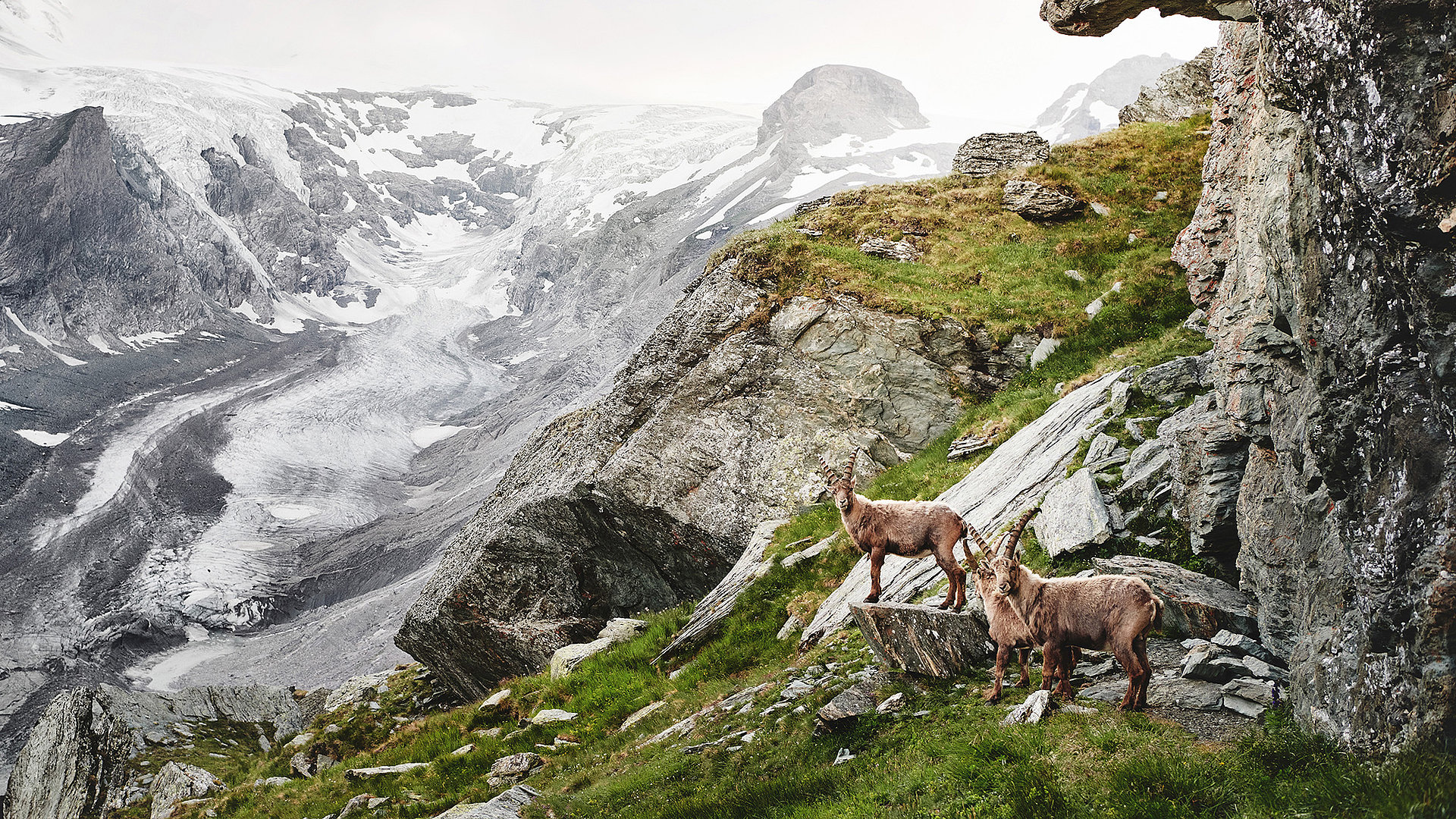
The Salzburg section of Hohe Tauern National Park is a true paradise for hiking and alpine adventures. Whether an ascent of the Grossglockner, a trip to the Kaprun High Mountain Reservoirs, or a visit to Krimml Waterfalls – here you’ll find not only unforgettable encounters with nature but also some serious sporting challenges.
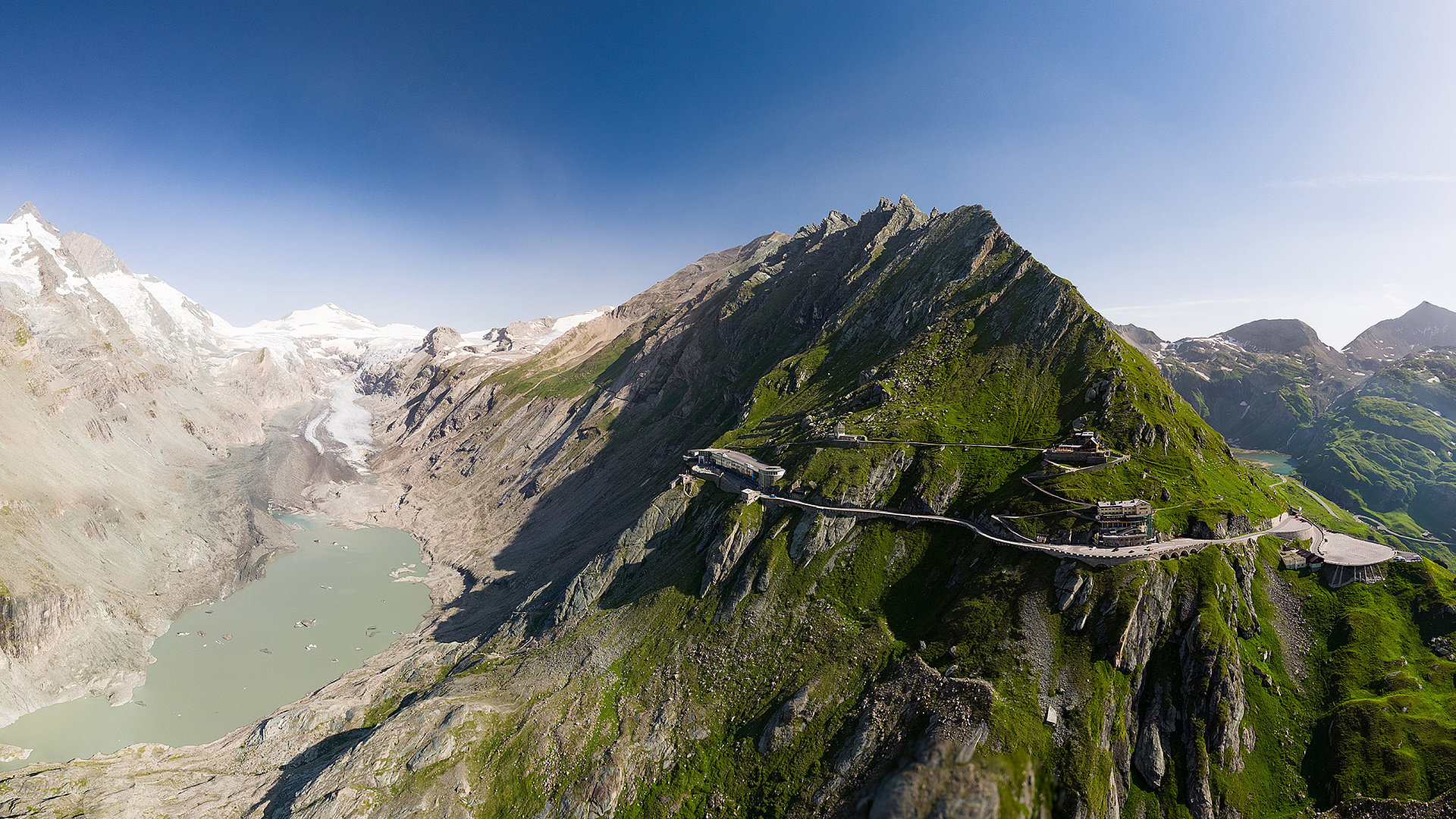
In autumn especially, the variety-filled mountain landscapes surrounding the Grossglockner are perfect for hiking and touring. Aside from the physically challenging routes, there is plenty to discover even for those who are perhaps less athletically inclined. The Rother hiking guide “Hiking on the Grossglockner High Alpine Road” describes 55 different routes.
Tip: This guidebook (in German) is actually included in the “Golden Hiking Autumn” package, which lets you explore the Grossglockner High Alpine Road for eight days for just €62.
Short Hikes
Your adventure starts in the valley: from the Ferleiten toll station, the first (stroller-friendly) pathway leads up to the Oberstattalm. Nearby, at Gasthof Tauernhaus Ferleiten, the Käfertal adventure trail begins – a family-friendly, roughly 4 km loop that passes a fun water playground.
For sweeping views at higher elevations, there are also several short, easy hikes alongside the scenic road – for instance, from the Fuschertörl restaurant up to the Edelweissspitze. Another short walk (about 30 minutes out and back) takes you from bend 3 up to the Fallbach waterfall.
Easy and Intermediate Mountain Tours
By car or with the Glocknerbus, you can ride in comfort up to the Kaiser-Franz-Josefs-Höhe. From there, it’s about an hour’s walk to the Kaiserstein (elev. 2,489 m).
Tip: This tour is offered free of charge twice a day led by a National Park ranger, at 10:30 a.m. and 1:30 p.m. From September 26 to October 25, guided tours take place every Friday and Saturday. Changes may occur due to weather conditions, and advance registration by phone (+43 48256161) is required.
For something a little more demanding, we suggest the route from the Edelweiss-Spitze to the Baumgartl Kopf. Covering a distance of 4.7 km, you will climb 785 vertical meters, so good physical condition is also a must in this case.
For those setting their sights even higher still, the trail from the Hochtor South Portal leads up to the three-thousand-meter summit of the Brennkogel (3,018 m). The route is about eight kilometers long (approximately 5 ½ hours of actual walking time) and showcases the mountains in all their variety.
Very Challenging Tours
Want to hike one of the four main routes to the summit of the Grossglockner (3,798 m)? Since the first ascent in 1800, countless mountaineers have accepted the challenge. These strenuous two-day tours require both technical skill and stamina – and should only be attempted with proper gear and an experienced guide.
From nature paths to via ferratas, there’s so much to explore around the Kaprun High Mountain Reservoirs. Nature and sport go hand-in-hand. No matter how ambitious your goals, the nearly 1,000 vertical meters up to the Mooserboden reservoir – the starting point for many tours – are best tackled with the help of transfer buses and the Lärchwand inclined lift.
Tip: Use the interactive map to plan your tour in advance. You will also find vital information about essential equipment and the level of difficulty.
Easy Hikes
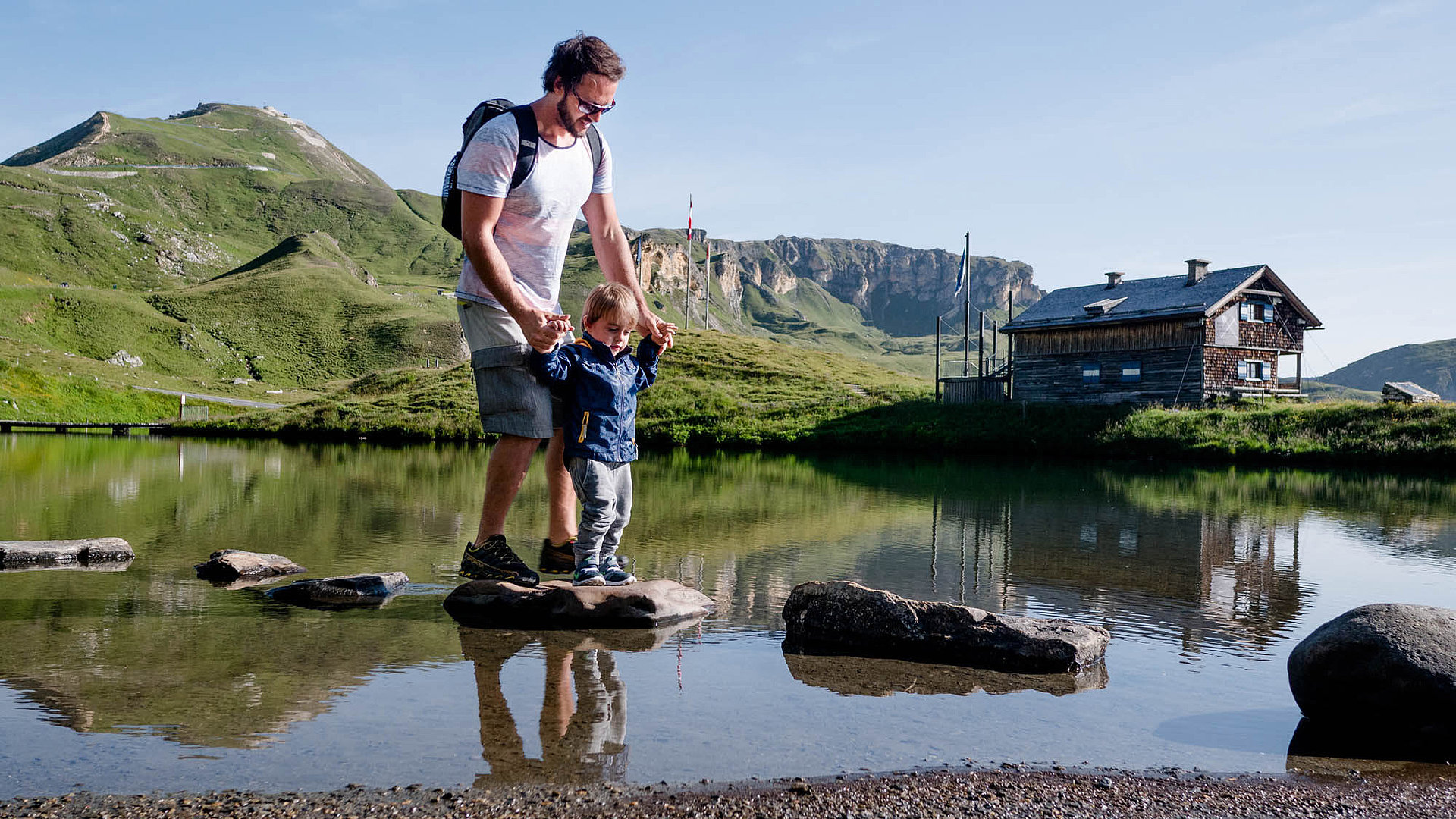
The Herb Path is ideal for families, taking only 45 minutes to walk (one way) with a 237-meter elevation change. Sturdy shoes with non-slip soles are still a must. From the Mooserboden bus stop, a clearly marked path leads downhill to the Fürthermoar Alm. If you don’t wish to walk back up, you can simply board the bus for the return trip right there.
Intermediate Mountain Tours
From the valley (Alpenhaus Kesselfall), the trail leads up to the Mooserboden reservoir. This route is demanding, with around 1,000 vertical meters to overcome – but the rewards more than make up for the effort involved: splendid views of the reservoirs framed by a breathtaking alpine panorama. Surefootedness and a head for heights are essential. Thanks to the Lärchwand inclined lift, part of the climb can be skipped if desired, and the return can also be done by bus instead of on foot.
Tip: For longer tours starting at the Mooserboden reservoir, we suggest using the shuttle for mountaineers, which leaves the Kesselfall ticket office every weekend from June to September at 6:45 a.m. Tickets have to be booked online in advance.
From Mooserboden, it will take you just over two hours to reach the Kleiner Grieskogel. The route initially ascends through steep alpine meadows to the Sedlgratkopf, then continues via an unmarked and unsecured path to the Kleiner Grieskogel. This hike requires both surefootedness and solid alpine experience.
Eldorado for Climbing Fans
The Höhenburg Via Ferrata Arena features three climbing routes of varying difficulty. The “Limberg Dwarf” is suitable even for children, while the longest, the “Mooser Mandl,” is rated C/D. The most challenging is the “Drossen Witch,” which even includes a short E-rated section.
One special highlight for adventurous visitors is the MOBO107 via ferrata on the wall of the dam. Here, you don’t just explore the dam from the inside, but also from the outside – with the start of the climb accessed by zipline! The route is graded A-B, though with a C-rated variant.
Tip: Guided tours are offered for both the Höhenburg Via Ferrata Arena as well as MOBO107. At the Mooserboden Info Point, via ferrata equipment sets can also be rented if needed.
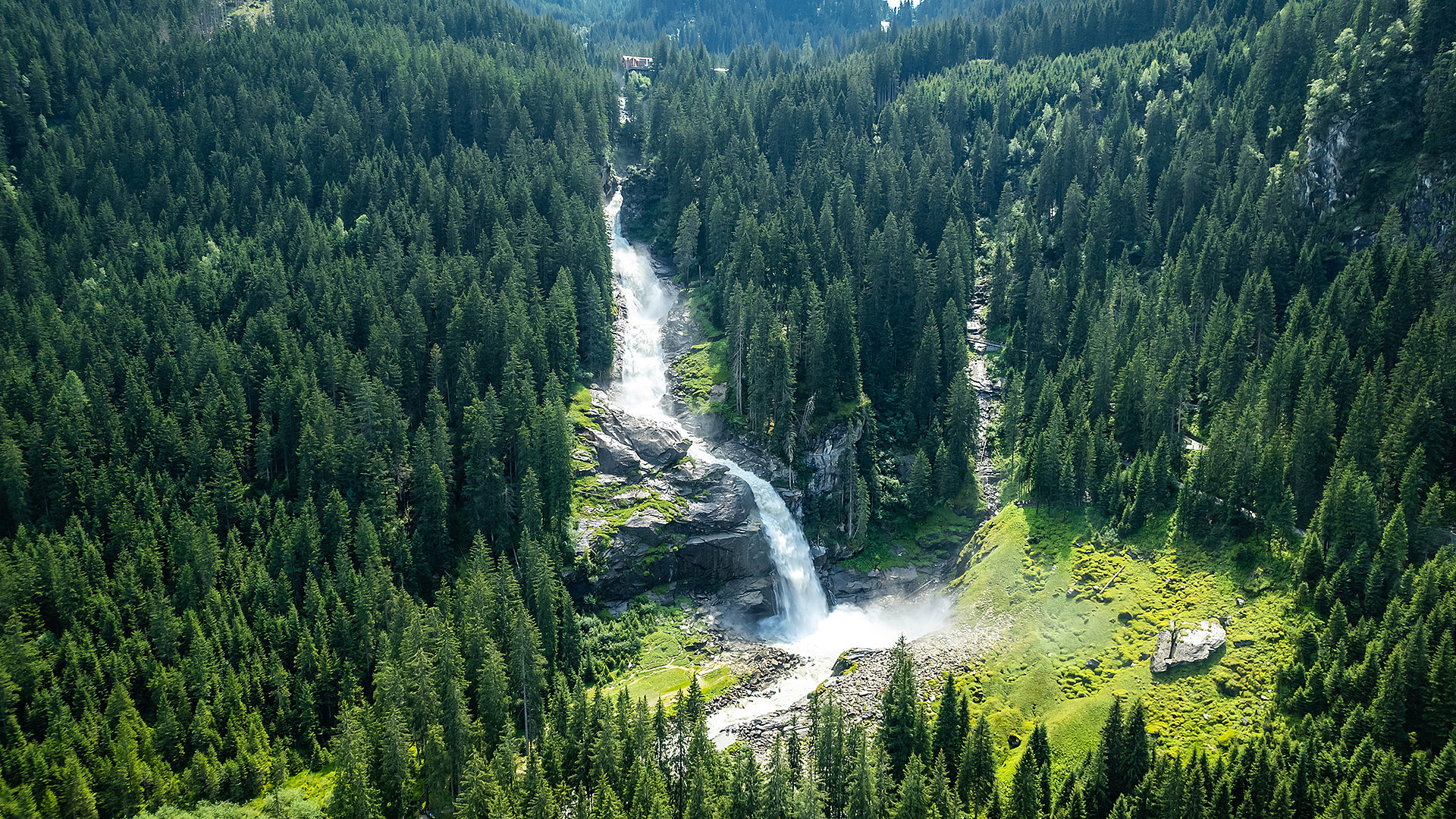
The Krimml Waterfalls are not only a sight to behold but also a great hiking opportunity. The Waterfall Trail runs past all three tiers of the falls, leading you to the highest tier in about 1.5 to 2 hours. The efforts of your climb are rewarded with glorious views and the fascinating spectacle of thunderous cascades of water. Those wishing to go further can even continue into the idyllic Krimmler Achental valley, all the way to the Tauernhaus.
Tip: With a combo ticket including the waterfalls as well as Krimml WaterWorlds, you are able to get even closer to the elemental power of water.
About 45 km south of Salzburg lies the Tennengebirge range, part of the Northern Limestone Alps. Near the village of Werfen, at over 1,600 meters above sea level, you will find reputedly the largest ice cave in the world. Even the short climb to the valley station of the cable car, and from the mountain station to the cave entrance, requires a degree of stamina. Inside the cave itself – accessible only as part of a guided tour – you will have to negotiate roughly 1400 steps. That said, with a cool ambient temperature of around 0°C, you won’t exactly break a sweat. The rewards for your physical exertion are extraordinary: towering ice formations, lit by flickering torches, create an atmosphere you won’t soon forget. Good footwear and warm clothing are strongly recommended.
Intermediate Mountain Tour
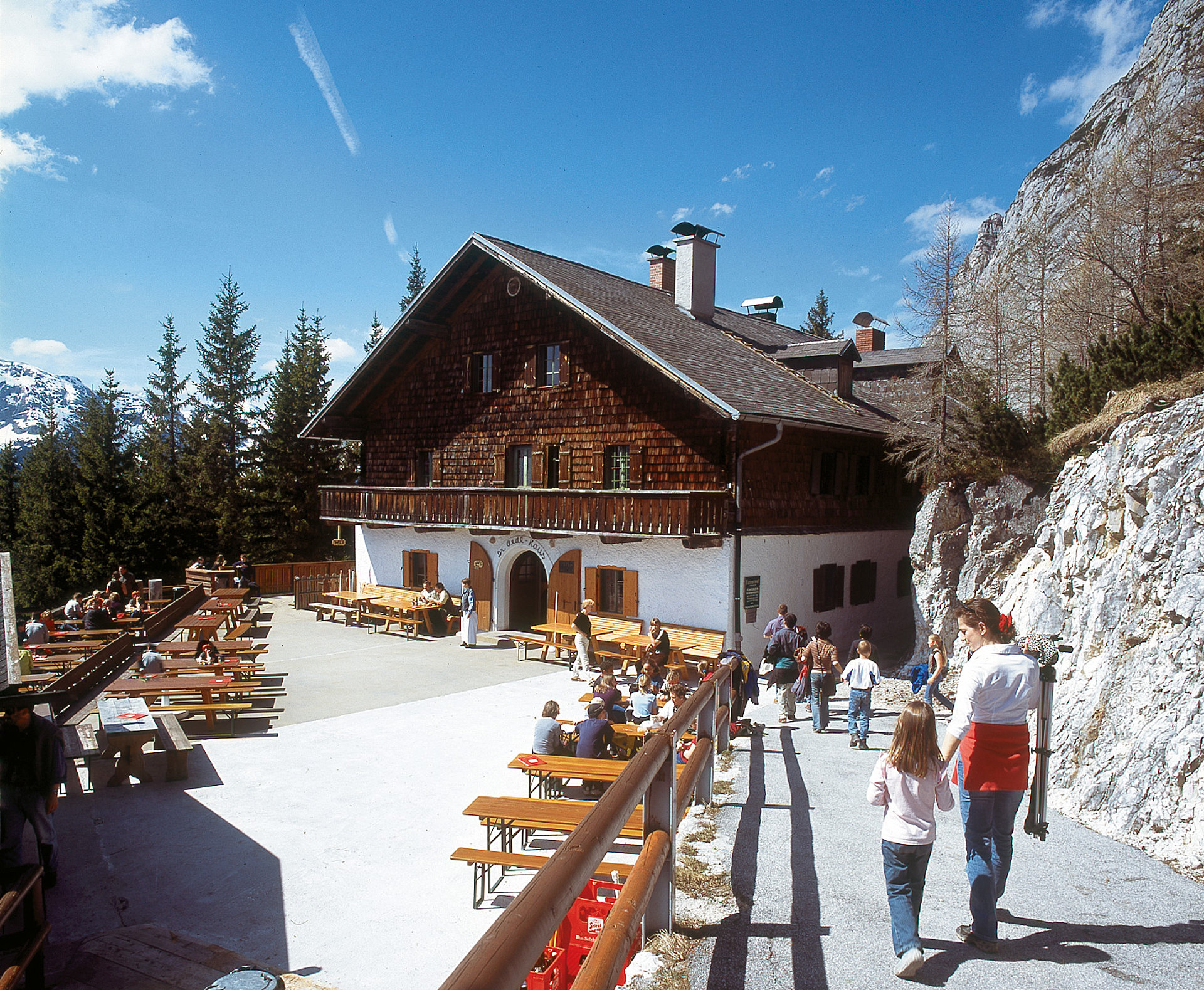
Before visiting the World of Ice Giants, you might opt for a short mountain hike. From the car park at the visitor center, it’s about a 1.5-hour hike up to the Dr. Oedl House. Surefootedness and a head for heights are a definite advantage since parts of the trail are quite exposed.
Challenging Mountain Tours
For experienced mountaineers, hiking routes lead from the Dr. Oedl House up to the Leopold-Happisch House, a starting point for further summit ascents. Information about tours and overnight lodging options should be obtained in advance.
It isn’t only the Untersberg itself that draws hikers and mountain lovers. On its northwestern slopes, right on the border with Bavaria, lies the expansive Untersberg Nature Park, crisscrossed by a wide network of hiking and cycling trails. A detailed map is available from the Grossgmain Tourist Office. One particularly beautiful hike (about 4 km) runs from the Open-Air Museum to Gasthof Latschenwirt, then to the Kneipp spa in Grossgmain. From there, you are only a short detour away from the Plainburg ruins – also worthwhile.
Only at the Salzburg Open-Air Museum can you stroll through all five regions of Salzburger Land in a single day. Stroller-friendly gravel paths (7 km in total length) meander past original farmhouses spanning six centuries, each with a charm all its own.
Tip: Try walking through the museum in a counterclockwise direction for a change. If, after coming through the main entrance, you turn right into the Pinzgau section, you will first pass through shady woods before arriving in the remote Lungau. Off the busiest paths, you will encounter an array of hidden gems such as an old water pump, nicknamed the “hydraulic ram.”
The city of Salzburg also has a wealth of beautiful walks and hikes in store for visitors. Their special appeal: the unique blend of culture and nature.
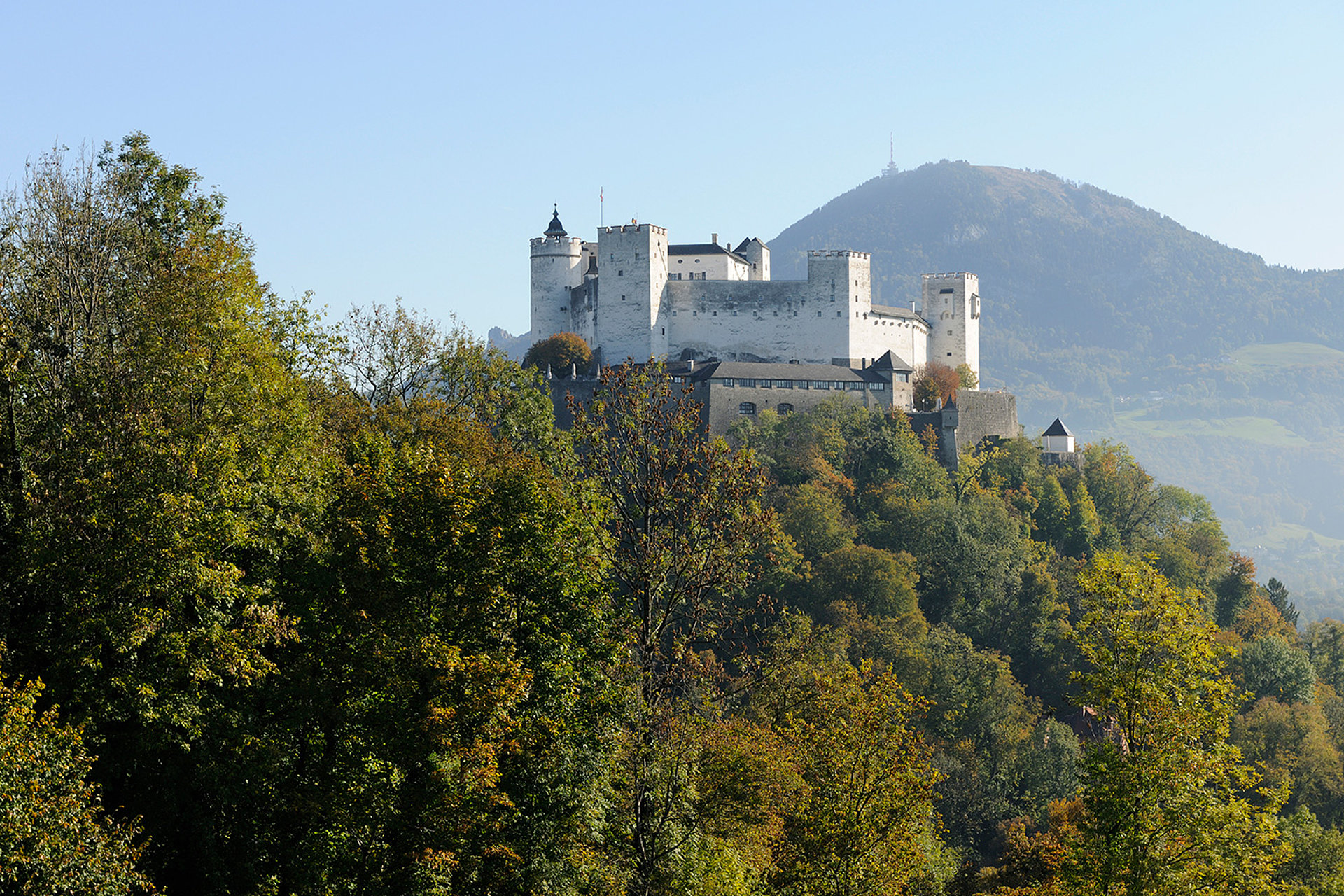
Mönchsberg, crowned by Hohensalzburg Fortress, is the quintessential city mountain for extended walks and magnificent views. From the Nonntal district, a steep path leads up to the fortress. Alternatively, you can take the Mönchsberg lift or ride the funicular. From Salzburg’s iconic landmark, it’s just a ten-minute walk to the Franz-Josefs-Höhe, home to a Buddhist stupa – a symbol of freedom, peace, and harmony that invites meditation and reflection. Another twenty minutes brings you to the Müllner Schanze, where climbing fans will find twelve different climbing routes, a roped climbing area, and a bouldering wall. You will now drop back down to the Mülln section of Salzburg, where the Augustiner Bräustübl is the perfect spot to enjoy refreshments and wind down an exciting day.
The expansive Hellbrunn Palace grounds are easily reached from Salzburg by public transport or bike; paid parking is also available. From the palace, several footpaths lead through the park and up the Hellbrunner Berg. A short ten-minute climb brings you to the Monatsschlössl, which houses the Salzburg Museum of Folklore. From the aptly named “Stadtblick” lookout point, you will be able to enjoy an idyllic panorama of the palace and its gardens. From the main path, you can also reach the historic Stone Theater, which – with its striking rock formations and unique setting – brings nature and culture together in a way found nowhere else. Also not to be missed: the Watzmann lookout point, treating you to beautiful views of Salzburg and the magnificent Berchtesgaden mountains.
![[Translate to English:] Großglockner Hochalpenstraße](/fileadmin/_processed_/d/9/csm_rz_glockner__MIK3701_462f29329c.jpg)



![[Translate to English:] Fürthermoar Alm](/fileadmin/_processed_/b/b/csm_F%C3%BCrthermoar_Alm__JFK-Photography_005_2da33ac3f8.jpg "[Translate to English:] Fürthermoar Alm")
![[Translate to English:] Kaprun Hochgebirgsstauseen](/fileadmin/_processed_/e/4/csm_Kaprun_Hochgebirgsstauseen__SLT-ChrisPerkles_002_3d79f25dc2.jpg "[Translate to English:] Kaprun Hochgebirgsstauseen")
![[Translate to English:] Klettersteig MOBO107 Zell am See-Kaprun](/fileadmin/_processed_/2/2/csm_Klettersteig_MOBO_107__ZellAmSee-Kaprun_001_e951168972.jpg "[Translate to English:] Klettersteig MOBO107 Zell am See-Kaprun")
![[Translate to English:] Salzburger Freilichtmuseum](/fileadmin/_processed_/5/6/csm_Laerchen04_b900910aca.jpg "[Translate to English:] Salzburger Freilichtmuseum")