Culture, the arts, technology, history, nature – Salzburg's exhibitions and museums have a fantastic variety to offer: not only a wealth of information and amazingly valuable art treasures from past and present, but also all kinds of interactive experiences. Take a trip through history. Meet people and learn their stories: Celts on the Dürrnberg, peasant families on their farms, Franciscan sisters and brothers in their convents, power-plant builders in Kaprun, Empress Elisabeth and Emperor Franz Joseph on the Grossglockner mountain. Each exhibition is a voyage of discovery.
Exhibitions and Museums in the Town and the Province of Salzburg

DomQuartier Salzburg
The DomQuartier, with its museums and the organ loft in the Cathedral, is one of the principal centres of culture and the arts in the Town of Salzburg. The former seat of the prince-archbishops is now a venue for exhibitions and concerts.
LifeArt. 800 years since the death of Francis of Assisi
24 May - 2 November 2026
This year's major special exhibition is devoted to one of the most frequently depicted saints in art history: Francis of Assisi. Entitled LifeArt, the exhibition combines art-works of diverse genres with writings and everyday objects from the life of the Franciscans.
Stephan Balkenhol. Là ci darem la mano ...
27 July - 5 October 2026
A highlight of contemporary art will be displayed on the Residenzplatz and in the state-rooms of the Residenz: Stephan Balkenhol's life-size sculptures represent characters from well-known operas. They will become familiar as townspeople, symbolising universal human themes including freedom, power, guilt, jealousy and love. The exhibition is entitled Là ci darem la mano ..., referring to the famous duet from Mozart's opera Don Giovanni.
![[Translate to English:] Franz von Zülow, Die Vogelpredigt, 1922 © Stiftsmuseum Klosterneuburg](/fileadmin/_processed_/1/9/csm_Zuelow_Vogelpredigt_LebensKunst_62e2cf85ee.jpg "[Translate to English:] Franz von Zülow, Die Vogelpredigt, 1922 © Stiftsmuseum Klosterneuburg")
Hohensalzburg Fortress
The Fortress, with its 1,000 years of history, houses several museums. From mediaeval art, through suits of armour, weapons and uniforms, to the Magic Theatre and the Marionette Museum, there is much to discover in these rooms.
The exhibition in the historic armoury focuses on the role of the Fortress as a fortification. Besides armour, artillery and small arms, an interactive model demonstrates attack and defence. The Fortress was considered impregnable; only once was it seriously besieged, during the Peasant Wars in 1525/6.
A tour of the Fortress Museum is like a journey into the Middle Ages. On display are suits of armour, coins, musical instruments and magnificent tableware from past centuries.
The Marionette Museum is well worth a visit. Fascinating figures from the Marionette Theatre, such as Papageno and Papagena or the famous Queen of the Night from Mozart's Magic Flute, charm children and adults alike.
![[Translate to English:] Festung Hohensalzburg - Magisches Theater](/fileadmin/_processed_/b/3/csm_MagischesTheater_fb34b8ef7e.jpg "[Translate to English:] Festung Hohensalzburg - Magisches Theater")
Salzburg Open-Air Museum
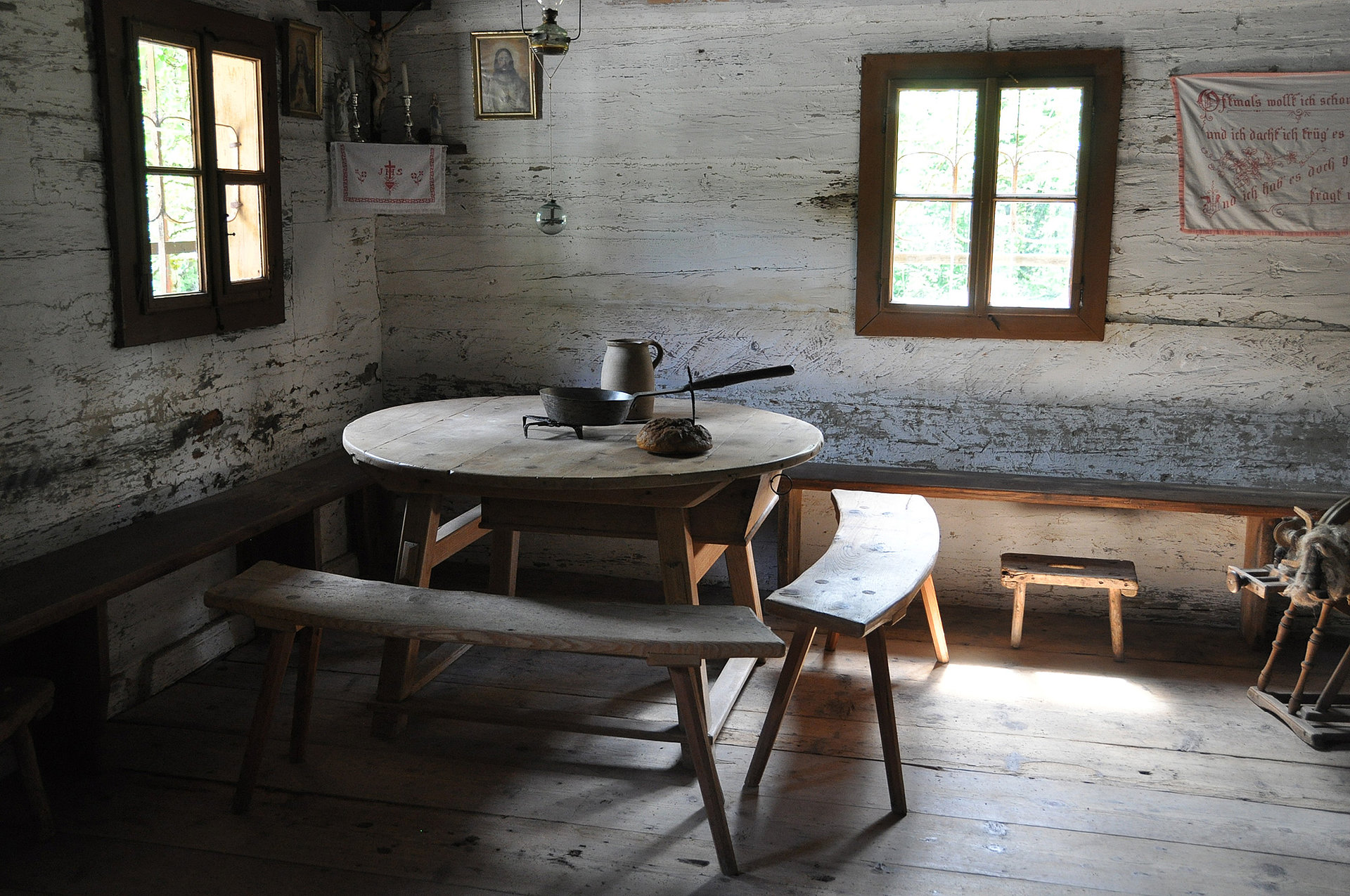
Here, 100 historic buildings have been reconstructed to offer authentic insights into the rural life of earlier times. On a walk through the Museum, the visitor experiences the worlds of agriculture, handcrafts, rural trade and industry through 600 years. Cosy living-rooms and lovingly tended gardens contrast with narratives of the arduous lives of peasant families. Fascinating for all ages: the tractor exhibition, the shadow scenography in the Lungau Abrahamhof, the collection of historical mousetraps – and of course a ride on the 2km-long museum railway. The Museum offers handcraft demonstrations and workshops, special guided tours and a wide variety of events.
Hellbrunn Palace & Trick Fountains
The summer palace of Prince-Archbishop Markus Sittikus, just a stone's throw from Salzburg, is one of the most popular places to visit. The Trick fountains are a very different kind of museum, refreshingly impressive, with fanciful grottos, gargoyles and a water-driven mechanical miniature theatre. In the Palace itself, the exhibition GrandDelight offers insights into the life of Markus Sittikus, illustrated with paintings and objects from the early 17th century – not to forget the "genuine" unicorn. The historical park with its fish-ponds, sculptures and springs is a veritable Wunderkammer of garden architecture. Whether you walk up to the Monatsschlössl, which houses the Salzburg Folklore Museum, or over the Hellbrunner Berg to the Stone Theatre – culture and nature are seldom found so intertwined as in Hellbrunn.
![[Translate to English:] Schloss Hellbrunn](/fileadmin/_processed_/9/8/csm_Schloss_Hellbrunn__Speisesaal_mit_Kachelofen_d5bc30e837.jpg "[Translate to English:] Schloss Hellbrunn")
Salt worlds & Celts.Adventure.Mountain
A multi-sensory experience deep inside the mountain: the Salzwelten, where the Celts were already mining salt 2,600 years ago. Salzburg's wealth was based not least on trading salt from the Dürrnberg. The journey into the mine begins with a ride on the legendary train, then on to the spectacular miners' slides and a raft to cross the mystical subterranean salt lake. On the way, scenes illustrate the labour of the miners and the enormous importance of the "white gold".
A visit to the Celtic Mountain is a must. The SALINA Celtic village shows how our Celic ancestors lived on the Dürrnberg, and in the salt manufactory, the resident "pan-master" demonstrates how he harvests his famous salt flakes by hand.
Children from the age of 4 may visit the salt mine – and there are special guided tours for children every Sunday at 2.30 pm. Important: wear warm clothing and sturdy shoes; the ground is stony and the temperature is always around 10°C.

Hohenwerfen Fortress
This year, Hohenwerfen Fortress presents two new exhibitions in the historic armoury.
The Fortress through the ages
You enter the exhibition through a time tunnel – a journey through almost a thousand years. The history of the Fortress and the way people lived there are illustrated by everyday objects and historical weapons. For children, past times are brought to life by the magic mirror and by two mice, Bärbel and Jacki, who act as playful guides. A wealth of artefacts – ranging from weapons belonging to the first and the last Werfen knights to curiosities of mediaeval dress, medicine and food – ensure a fascinating visit.
The uprising: Hohenwerfen Fortress in the Salzburg Peasants' War of 1525/26
500 years ago, Pongau peasants and miners from the Gastein Valley joined in an uprising against Prince-Archbishop Matthäus Lang. For a short time, the Fortress fell into the hands of the insurgents, and aristocrats were held hostage here until the "peace treaty" of summer 1525. The exhibition in the upper floor of the armoury is devoted to this historic episode of the Peasants' War and the role of Hohenwerfen Fortress as a scene of the conflict. Interactive elements invite the visitor to explore issues relating to human rights, democracy, power and resistance
Austrian Museum of Falconry
Anyone fascinated by a demonstration with the birds of prey and wishing to know more of the history should visit the Falconry Museum in the Wallerturm. Exhibits from diverse periods and continents illustrate the centuries-old practice of falconry and hawking.
![[Translate to English:] Erlebnisburg Hohenwerfen - Ausstellung](/fileadmin/_processed_/4/a/csm_20260414_burghohenwerfen_ausstellung_web_kathringollacknerfotografie-58_94a5a1c943.jpg "[Translate to English:] Erlebnisburg Hohenwerfen - Ausstellung")
Werfen Ice Caves (Eisriesenwelt)
Not a museum, but a unique natural feature, these ice caves in the Tennen mountain range are the largest in the world. In these vast natural halls, impressive giant stalagmites and stalactites are briefly lit up by magnesium flares. 700 steps (134m ascent) lead up to the highest accessible point in the cave, before the descent back to the exit. The guided tours are in English and German. The cave entrance is reached by cable-car and two ascents on foot. Sturdy shoes, warm clothing and stamina are recommended.

Fort Kniepass
The adventure trail leading up to the historic fortress is an open-air exhibition on the theme of "borders". Equipped with the "Knie-Pass", children and adults explore very different kinds of borders at twelve stations and find answers to many questions: How did borders come to exist? What kinds of borders are there? How were the world's borders determined? How do we perceive our own borders? At the end, each "Knie-Pass“ is assessed, and every visitor receives their own personalised result. There's a lot to discover in the Fort itself, and the adventurous can make a spectacular descent in the longest dry-tube slide in the Alps.
![[Translate to English:] Fort Kniepass](/fileadmin/_processed_/b/b/csm_20250731_fortkniepass_web_kathringollacknerfotografie-331_6989fb5517.jpg "[Translate to English:] Fort Kniepass")
Kaprun high mountain reservoirs
The new exhibition entitled Energy begins here opens in the Kaprun information centre in summer 2026. It covers the period from the early use of hydro-electric power to the beginning of modern electricity supply in Austria. Interactive installations explain the technology and power generation. On display are original objects from the archive, illustrating the everyday working life of the early power-station builders, with highlights including a walk-in pump turbine and an electricity-schedule simulator. Using augmented reality, the view inside the historic power station is digitally enhanced.
![[Translate to English:] Kraftwerk Hauptstufe Kaprun](/fileadmin/_processed_/1/9/csm_LowRes_Kraftwerk_Hauptstufe_Kaprun__KOE6216__c_VERBUND-Michael-Koenigshofer_c765245509.jpg "[Translate to English:] Kraftwerk Hauptstufe Kaprun")
VERBUND-Informationszentrum Kraftwerk Kaprun Hauptstufe
Krafthaustraße 20, 5710 Kaprun
Free Entrance
Grossglockner High Alpine Road
Summit meeting of Their Majesties
170 years ago, Empress Elisabeth and Emperor Franz Joseph visited the Grossglockner mountain and were delighted by the beauty of the surroundings. To mark the occasion, this viewpoint was named after the emperor: Kaiser-Franz-Josefs-Höhe. A new exhibition for the anniversary of this "summit meeting" opened in June. Visitors can follow the footsteps of the imperial couple along the redesigned walking and hiking trails.
Mercedes-Benz centenary / 80 years of Vespa
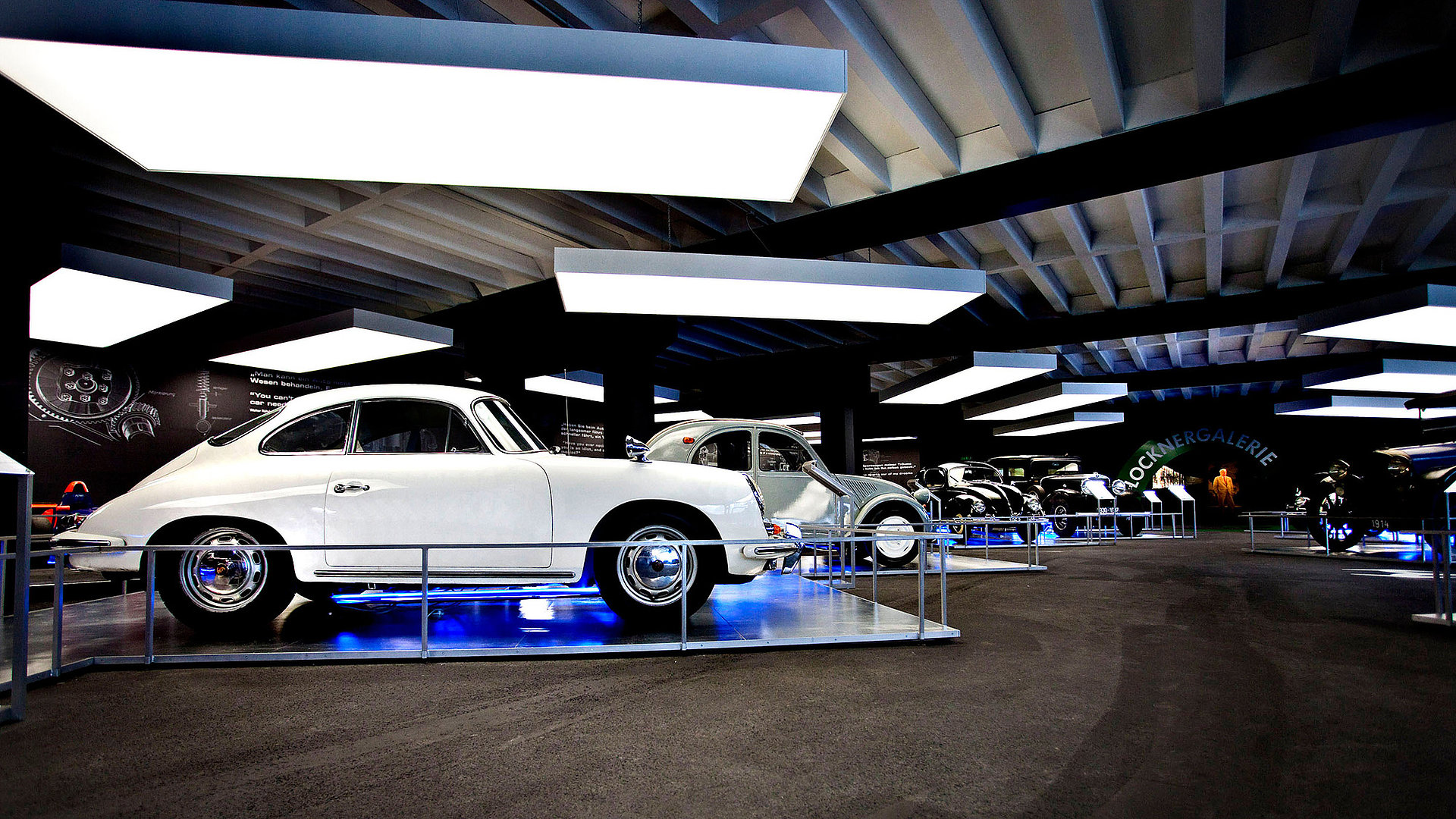
From June 2026, the world's highest-altitude motor show holds two special exhibitions in the visitor centre on the Kaiser-Franz-Josefs-Höhe. Mobility history is explained through two iconic brands: Mercedes-Benz and Vespa. In 1925, the three-pointed star set in a laurel wreath appeared, marking the birth of Mercedes-Benz. In 1926, the Daimler Motor Company merged with Benz & Cie to form Daimler-Benz AG. The Vespa brand, celebrating its 80th anniversary this year, enjoys similar loyalty from fans.
Glockner meadow experience centre
The new experience centre exhibition at Schöneck invites visitors to explore the sensitive natural surroundings on Austria's highest mountain. Children will enjoy the Apollo butterfly HighFive playground.
Infopoint Großglockner Hochalpenstraße - Kassenstelle Ferleiten
Ferleiten 1, 5672 Fusch an der Großglocknerstraße
Krimml WaterWorlds
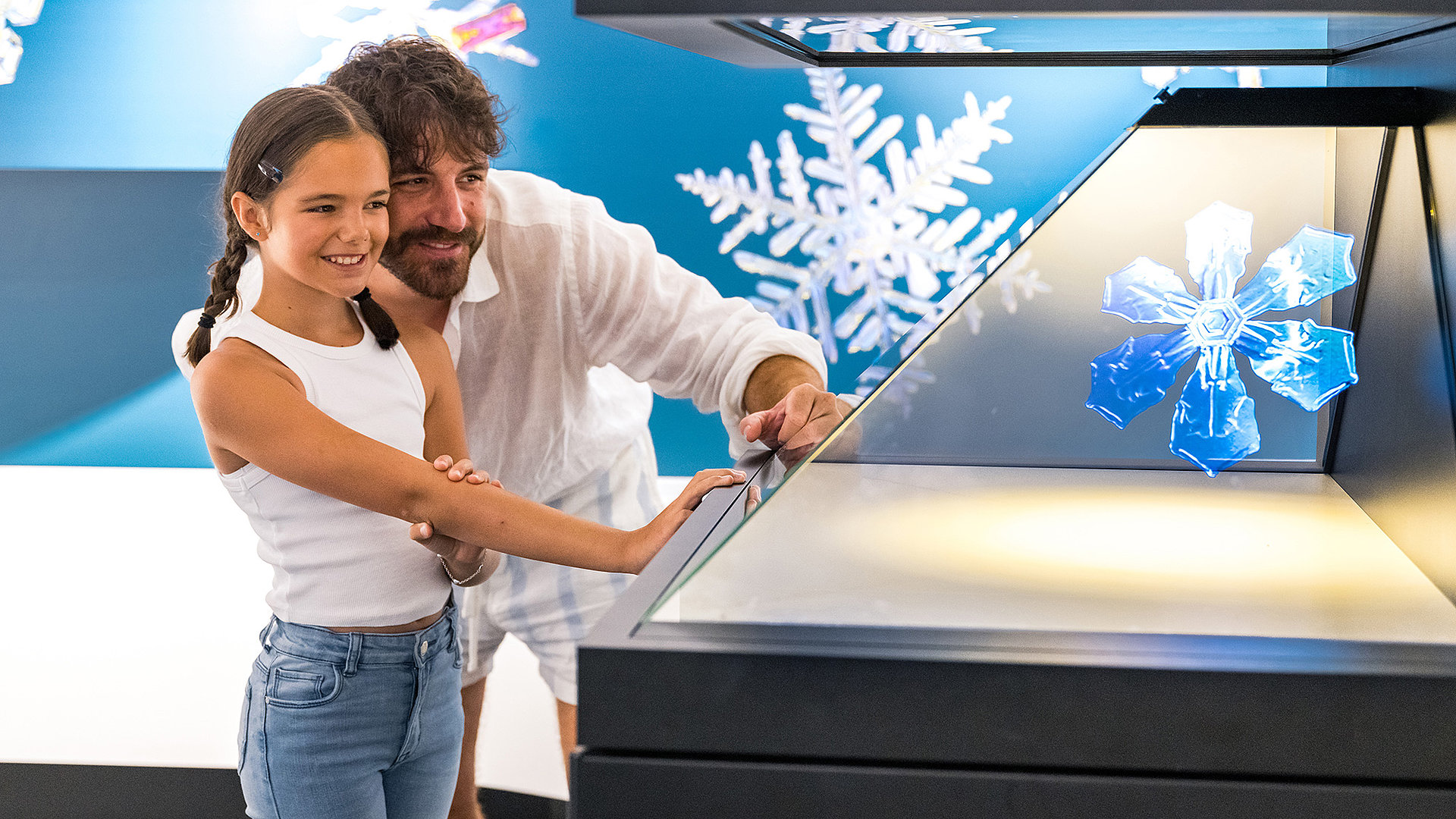
Krimml WaterWorlds, at the foot of the famous Krimml waterfalls, offers an immersive and informative experience of water. The focus is on this vital, refreshing element – whether in the water park with play areas, the magical water cinema in the Waterfall Centre or the Many Faces of Water exhibition in the House of Water, where the journey of a drop of water can be followed interactively. Fascinating facts and figures relating to water and its vital role for all plants and living creatures are explained and illustrated. On the top floor, look through the Swarovski telescope for a close-up view of the thundering waterfalls
Mauterndorf Castle
A visit to Mauterndorf Castle is a real journey through history. A former toll station and summer residence, it looks back on a chequered past. Exhibitions include Life in the Middle Ages, in the castle museum, Attack and Defence in a Fortified Castle Complex, in the rock cellar, and the sleeping‑chambers of Prince-Archbishop Leonhard von Keutschach. The Lungau Regional Museum is also housed in the Castle.
Epenstein: patron of the arts, honorary citizen and godfather to Hermann Göring
The current special exhibition is devoted to Berlin doctor Hermann Epenstein, who purchased the Castle in 1894 and saved it from ruin. He had it beautifully restored and refurbished, and used it as his summer residence until the outbreak of World War I. Epenstein was godfather to Hermann Göring (later a Nazi criminal), who occupied the Castle for some years. The exhibition explores the life of Hermann Epenstein and his relationship with Göring.
![[Translate to English:] Ausstellung Burg Mauterndorf](/fileadmin/_processed_/6/c/csm_Ausstellung_BurgMauterndorf_66_31eca1fadc.jpg "[Translate to English:] Ausstellung Burg Mauterndorf")


